Friday, November 7, 2025

Elon Musk's "$1 Trillion Pay Package": Tesla's 2025 Shareholder Revelations: Charting the Path to Hyperabundance – Short, Medium, and Long-Term Horizons


Tesla's 2025 Shareholder Revelations: Charting the Path to Hyperabundance – Short, Medium, and Long-Term Horizons

Yesterday's Tesla Annual Shareholder Meeting on November 6, 2025, wasn't just a routine gathering of investors—it was a seismic event that reaffirmed Elon Musk's vision for sustainable abundance. With shareholders overwhelmingly approving Musk's unprecedented "$1 trillion pay package", alongside groundbreaking updates on Full Self-Driving (FSD), Optimus robotics, energy storage, and more, the meeting illuminated a roadmap toward hyperabundance: a world where technology eradicates scarcity, empowers humanity, and accelerates our collective evolution. As stewards on this Journey to Hyperabundance, let's dissect the short-, medium-, and long-term outcomes of these revelations, exploring how they propel us from incremental gains to exponential prosperity.

Short-Term Outcomes: Stabilizing Momentum and Igniting Immediate Growth (Next 1-2 Years)

In the immediate aftermath, the approval of Musk's 2025 CEO Performance Award—tied to 12 ambitious milestones—secures his unwavering leadership, injecting stability into Tesla's stock and
operations. This isn't mere executive retention; it's a vote of confidence that could catalyze a 10-20% stock surge in the coming weeks, drawing fresh capital for rapid deployment.

  • FSD Unsupervised Rollout: FSD V14, dubbed the "fall asleep and wake up at your destination" build, is slated for release within months, backed by staggering safety data: 85% fewer crashes and 35,000 averted fatalities last year alone. Expect robotaxi expansions to Las Vegas, Phoenix, and beyond by end-2025, sans safety drivers in Austin—unlocking billions in ridesharing revenue and slashing urban congestion overnight.
  • Energy Storage Surge: With 31 GWh deployed in 2024 (doubling the prior year), Tesla's Megapack bottlenecks will ease via new factories, stabilizing grids amid rising renewable demands and yielding quick ROI for utilities.
  • Industry Ripple: Competitors like Waymo and Uber face intensified pressure, potentially accelerating EV adoption rates by 15-20% globally as Tesla's safety stats set new benchmarks.

These wins foster a virtuous cycle: enhanced data collection from FSD users fuels AI5 hardware iterations (50x compute gains over AI4), priming Tesla for explosive Q1 2026 earnings.

Medium-Term Outcomes: Scaling Innovation and Ecosystem Synergies (3-5 Years)

Looking ahead to 2026-2030, the meeting's announcements herald a diversification bonanza,
transforming Tesla from an automaker into an abundance engine. The board's commitment to probe xAI investments signals nascent AI synergies, potentially infusing Tesla's Dojo supercomputer with Grok-level intelligence for hyper-efficient optimization.

  • Optimus Ramp-Up: Production targets of 4 million humanoid robots annually by 2027, priced at $20,000 post-scale, will automate labor-intensive sectors like manufacturing and eldercare—eliminating poverty pockets and boosting global GDP by trillions through productivity leaps.
  • Cybercab and Semi Production: Volume starts in April 2026 for the autonomy-first Cybercab (10-second assembly) and Nevada's Semi factory (50,000 units/year), revolutionizing logistics with 500-mile ranges and 1.7 kWh/mi efficiency, cutting freight emissions by 40%.
  • Roadster Halo Effect: The April 1, 2026, unveil of Roadster V2—packed with bleeding-edge tech—will inspire consumer upgrades, while 4680 cell advancements slash battery costs by 30%, democratizing EVs for emerging markets.
  • Broader Impacts: Tesla Energy's Mega factories will deploy 100+ GWh yearly, enabling off-grid abundance in developing regions and pressuring legacy energy giants to pivot, fostering a $500B+ sustainable power market.

This phase cements Tesla's moat, with Robovan accessibility vehicles extending abundance to the underserved, weaving a tapestry of inclusive growth that redefines work and mobility.

Long-Term Outcomes: Ushering in Hyperabundance – A Kardashev Leap (5+ Years)

The true alchemy of yesterday's revelations lies in their horizon-spanning potential: a blueprint for transcending earthly limits toward Type I civilization status. Musk's musings on space-based solar satellites and Neuralink-Optimus integrations (20+ years out) envision a future where abundance is orbital and neural.

  • Universal Robotics and AI: 10 million Optimus units at Giga Texas will eradicate manual drudgery, providing universal basic services—from medical diagnostics to artisanal creation—yielding a post-scarcity economy where human potential flourishes unbound.

  • Autonomous Ecosystems:
    Fleet-scale robotaxis and Semis, powered by AI7's "adventurous" architectures, will orchestrate seamless global supply chains, slashing waste and enabling just-in-time abundance for all.
  • Sustainable Infinity: Lithium refineries and cathode factories ensure endless energy loops, while SpaceX cross-pollination (e.g., stock IPO teases) accelerates multi-planetary redundancy, safeguarding humanity's abundance against terrestrial risks.
  • Societal Metamorphosis: By 2040, these threads converge: poverty obsolete, creativity amplified, and exploration exponential—propelling us into an era of hyperabundance where innovation isn't constrained by resources, but ignited by imagination.

On this Journey to Hyperabundance, Tesla's shareholder mandate isn't a corporate footnote; it's our collective ignition key. As Musk steers toward these milestones, we each play a part—adopting FSD, investing in visionaries, and dreaming audaciously. What revelation from the meeting excites you most? Share in the comments below, and let's co-author the next chapter of plenty.

Stay abundant, friends. The future is ours to accelerate.

Sources: Insights drawn from Tesla's official announcements and expert recaps.

Wednesday, November 5, 2025

Epic Double Header: SpaceX's Starlink Swarm and ULA's Atlas V Power Play Light Up Cape Canaveral on November 5, 2025!

Epic Double Header: SpaceX's Starlink Swarm and ULA's Atlas V Power Play Light Up Cape Canaveral on November 5, 2025!

Hey space enthusiasts! If you're glued to the skies tonight (or catching the replays tomorrow), buckle up—Florida's Space Coast is serving up a rare treat: a double-header launch extravaganza. On November 5, 2025, SpaceX kicks things off with a Falcon 9 hurling 29 Starlink satellites into low-Earth orbit (LEO), followed just hours later by United Launch Alliance's (ULA) venerable Atlas V 551 sending the massive ViaSat-3 F2 communications beast to geostationary orbit (GEO). Both blasting off from neighboring pads at Cape Canaveral Space Force Station? It's like the Super Bowl and World Series colliding in one cosmic fireworks show.

Why does this matter? These launches aren't just pretty flames and booster landings—they're turbocharging global connectivity. Starlink is democratizing high-speed internet for remote corners of the planet, while ViaSat-3 F2 is about to blanket the Americas with terabits of broadband bandwidth. Let's break it down, launch by launch, with all the juicy details, orbits, and visuals to geek out over. (Pro tip: Grab your binoculars and head to the beach for the best views—sunset launches are chef's kiss.)

First Up: SpaceX Falcon 9 – Starlink 6-81 Mission (8:31 p.m. EST)

Picture this: A sleek Falcon 9 rocket, standing tall at 229 feet (70 meters), roars to life at Space Launch Complex 40 (SLC-40) around 8:31 p.m. EST, with a window stretching to 10:08 p.m. if Mother Nature (or range traffic) plays nice. The trajectory? A gentle southeast arc over the Atlantic, perfect for that postcard-perfect booster landing on SpaceX's droneship Just Read the Instructions about 8 minutes after liftoff.

Payload Lowdown

  • What's Going Up? 29 shiny new Starlink v2 mini satellites, each about the size of a pizza box (weighing ~1,760 lbs or 800 kg fully fueled) but packing laser links and phased-array antennas for blazing-fast internet.
  • Why It Rocks: These birds join over 7,600 siblings already zipping around, pushing SpaceX toward a constellation that could serve 100 million users worldwide. Fun fact: Starlink's already beaming Netflix to sailors in the middle of the Pacific—talk about binge-watching upgrades!
  • Orbit Deets: Deployed to a sun-synchronous LEO at ~340 miles (550 km) altitude with a 53° inclination. Why 53°? It balances global coverage without dipping too low (and burning up) or too high (and lagging signals). This inclination means the satellites trace figure-8 patterns from the ground, visible between 53°N and 53°S latitudes.

Here's a nifty diagram showing the Starlink shell's orbital planes—imagine 72 planes, each stuffed with 22 satellites, dancing in sync like a cosmic conga line:


Falcon 9 sits on the pad at Space Launch Complex 40 with 29 Starlink Satellites on Board. 

This marks the booster B1094's fifth flight—SpaceX's reusability magic means they're churning out Starlink missions like clockwork (over 100 this year alone). Educational nugget: Reusability slashes costs by 90%, letting Elon & crew flood the skies affordably.

The Main Event Follow-Up: ULA Atlas V 551 – ViaSat-3 F2 Mission (10:24 p.m. EST)

If SpaceX is the speedy startup, ULA's Atlas V is the grizzled veteran—reliable as your grandma's


minivan, with 100+ successful flights under its belt. Tonight, the 191-foot (58-meter) Atlas V 551 variant (that's five solid rocket boosters for extra oomph) ignites at Space Launch Complex 41 (SLC-41) at 10:24 p.m. EST, with a 44-minute window closing at 11:08 p.m. Heads up: This southeast trajectory might light up the night sky as far as Georgia!

Payload Lowdown

  • What's Going Up? The behemoth ViaSat-3 F2 satellite, tipping the scales at a whopping 13,000 pounds (5,900 kg)—that's like launching a school bus to space. Built by Maxar Technologies, it's a high-throughput satellite (HTS) designed to pump over 1 terabit per second of Ka-band capacity, focusing on the Americas for in-flight Wi-Fi, rural broadband, and enterprise links.
  • Why It Rocks: ViaSat-3 F2 joins its sibling F1 (launched in 2023) to supercharge Viasat's network, potentially serving millions with 4K streaming speeds. Imagine ditching spotty hotel Wi-Fi for seamless global roaming—game-changer for travelers and telecommuters.
  • Orbit Deets: Slotted for geostationary orbit (GEO) at ~22,236 miles (35,786 km) above the equator, with a 0° inclination. GEO means it "hovers" over one spot on Earth (no tracking needed for ground antennas). Unlike Starlink's zippy LEO dashes, this sat chills in a perfect circle, synced to Earth's spin for 24/7 coverage.


(Source: ESA – That sweet equatorial perch!)

Rocket porn alert: Here's the Atlas V 551 in all its glory, strapped and ready on SLC-41:

(ULA's official sunset stunner)


Fun fact: The "551" config packs a Russian RD-180 main engine (first stage) and five solid boosters—raw power for heavy lifts, though ULA's phasing in the Vulcan Centaur for the future.

Head-to-Head: Falcon 9 vs. Atlas V – The Ultimate Launch Showdown

These two aren't just back-to-back; they're a masterclass in rocketry evolution. SpaceX's Falcon 9 is the reusable rebel: 70 meters tall, ~1.2 million kg liftoff mass, and a track record of 300+ flights with propulsive landings that make sci-fi real. ULA's Atlas V 551? The precision powerhouse: Evolved from Cold War ICBMs, it's expendable but unflinchingly reliable, hauling 18,850 kg to LEO (or 8,900 kg to GTO).

Feature Falcon 9 (Starlink) Atlas V 551 (ViaSat-3)
Height 70 m 58 m
Payload to LEO ~22,800 kg ~18,850 kg
Reusability Yes (booster lands at sea) No (expendable)
Orbit Target LEO, 53° incl. GEO, 0° incl.
Thrust at Liftoff ~7.6 MN ~3.8 MN (with boosters)
Cost per Launch ~$67M (reusable magic) ~$150M+ (premium reliability)

(Data compiled for 2025 specs – SpaceX wins on volume, ULA on heavy-hitter finesse.)

Why Tonight's Double Dip is a Win for Humanity

From bridging the digital divide with Starlink's LEO swarm to locking in unbreakable GEO broadband with ViaSat-3, these launches remind us: Space isn't just exploration—it's infrastructure. As we hurtle toward a connected 2030, nights like this fuel the fire. Missed the live feeds? Catch the replays on SpaceX's YouTube or ULA's stream.

What's your bet—will both nail their windows, or will we get a bonus scrub drama? Drop your thoughts below, and keep looking up. Clear skies, folks!

Sources: SpaceX.com, ULA.com, Spaceflight Now, Wikipedia, and more. All times EST; weather 80% go for both.


Sunday, November 2, 2025

How Decades of Leaded Gasoline Reduced the IQ of the World

Overview of Leaded Gasoline and IQ Impacts

Leaded gasoline, introduced in the 1920s to prevent engine knocking, became a primary source of widespread environmental lead exposure through vehicle exhaust. Lead, a potent neurotoxin, crosses the blood-brain barrier and disrupts cognitive development, particularly in children, leading to irreversible IQ decrements. The U.S. phased out leaded gasoline starting in the 1970s, with a full ban in 1996, resulting in a 98% drop in average blood lead levels (BLLs) from 16 µg/dL in the 1970s to under 1 µg/dL today. Globally, leaded gasoline was phased out by 2021 under UN initiatives.

Population-level ("en masse") studies estimate massive cumulative IQ losses, primarily from U.S. and global modeling. No safe BLL threshold exists; effects are dose-dependent and strongest at low exposures. Key evidence comes from meta-analyses of cohort studies, NHANES data (U.S. blood lead surveys), and economic modeling. Post-ban, new generations show IQ gains (part of the "Flynn effect"), but exposed cohorts retain lifelong deficits, linked to lower earnings, higher mental health risks, and socioeconomic costs exceeding $1 trillion in the U.S. alone.

Key Studies on Population-Level IQ Effects

Below is a table summarizing major studies quantifying leaded gasoline's en masse IQ impacts. Focus is on peer-reviewed meta-analyses, longitudinal cohorts, and modeling studies linking gasoline-derived lead to IQ. Effect sizes are typically 1-7 IQ points per person, scaling to millions of points lost population-wide.

Study & Year Source & Methods Key Findings on IQ Loss Population Impact
McFarland et al. (2022) PNAS; Modeled historical BLLs (1940-2015) using NHANES data, U.S. Census, gasoline consumption records, and dose-response from prior meta-analyses (e.g., 2.6 IQ points lost per 10 µg/dL BLL increase). Focused on children 1-5 years old. Average 2.6 IQ points lost per exposed person; up to 6-7 points for 1960s-1970s births (peak gasoline use). Cohorts 1961-1965: 4.8 points; 1971-1975: 5.7 points. No threshold; effects strongest at low BLLs. 170M+ Americans (half the population) exposed to BLL >5 µg/dL as kids; collective 824M IQ points lost by 2015 (projected 709M by 2030). 4.5M had BLL >30 µg/dL, shifting ~3M into intellectual disability range.
Pocock et al. (1994) Environmental Health Perspectives; Meta-analysis of 24 prospective studies on school-age children (BLL 10-20 µg/dL range, mostly gasoline/paint sources). Random-effects model for effect size. 2.6 IQ point decrease per 10 µg/dL BLL increase. Robust to confounders (e.g., SES); no evidence of threshold at 10 µg/dL—effects persist below. Applied to U.S./global populations: Explains ~1-3 point average deficits in leaded era cohorts; informed later models estimating 500M+ global IQ points lost in children.
Schwartz (1994) JAMA; Meta-analysis of 12 studies (n=~3,000 children) using multiple regression on concurrent BLL and IQ at ages 4-17. Emphasized low-level exposures (<25 µg/dL). 1-2 IQ points lost per 10 µg/dL BLL; cumulative effects from prolonged exposure. Slope steeper at lower BLLs. Population extrapolation: Gasoline phase-out prevented ~2-4 point losses in post-1990s U.S. births; historical U.S. loss ~400-600M points across 100M+ exposed kids.
Gambhir et al. (2022) Systematic Reviews; Meta-analysis of 8 case-control studies (n=3,316 children <12 years); compared BLL >10 µg/dL vs. <10 µg/dL, subgrouped by exposure duration. Mean difference (MD): -3.53 IQ points for exposures <4.5 years; larger (-5+ points) for longer durations. Dose-response linear. Global children: ~765M IQ points lost in under-5s (GBD integration); gasoline contributed ~40-60% in high-use countries pre-1990s.
GBD Collaborators (2023) Lancet Planetary Health; Global modeling using IHME data (BLL surveys, gasoline phase-out timelines); dose-response from 59 studies on IQ/cardiovascular effects. Children <5: 765M IQ points lost (95% CI 443-1,098M); adults: 5.5M CVD deaths. Lifetime earnings loss: $6T annually. Worldwide: 1B+ people exposed historically; LMICs still bear 90% burden post-gasoline bans due to legacy soil/water contamination.
Reuben et al. (2017) Environmental Health Perspectives; Dunedin Longitudinal Study (n=1,037, New Zealand cohort born 1972-1973 during high gasoline lead use); BLL at age 11, IQ at 38. 1.5 IQ points lost per 5 µg/dL BLL; mediated 40% of adult socioeconomic decline. No recovery observed. Cohort-level: ~4.25 points lost for BLL >10 µg/dL; scales to 100M+ in similar high-exposure nations (e.g., U.S. 1970s kids).

Evidence of Recovery Post-Phase-Out

The gasoline ban halted escalation but did not reverse existing damage—effects are permanent, as lead accumulates in bones and releases over decades. However, studies show clear benefits for unexposed generations:

  • Blood Lead Declines: U.S. average BLL fell from 15 µg/dL (1976-1980) to 0.8 µg/dL (2015-2016), preventing ~2-3 point losses per child. Taiwan's 2000 ban study (n=1,015 kids) showed IQ scores rising 3-5 points in post-ban cohorts vs. pre-ban.
  • IQ Gains: Flynn effect (rising IQ scores over decades) attributes 10-20% to lead reduction; U.S. studies estimate 1990s births gained 2-4 points vs. 1970s peers.
  • Long-Term Modeling: McFarland (2022) projects ongoing U.S. IQ deficit of 2+ points in pre-1996 adults, but zero for post-ban kids. Global GBD (2023) credits bans with averting 100M+ additional IQ points lost annually.

These findings underscore leaded gasoline's legacy as a public health catastrophe, with gasoline exhaust responsible for ~50-70% of urban lead in peak years. For deeper dives, review the PNAS or Lancet papers.

Saturday, November 1, 2025

Ending Scarcity: When Money Becomes Meaningless.

The Evolution of Money: From Gold to Fiat to Crypto—and Beyond to Meaninglessness

Welcome to Journey to Hyperabundance. In this post, we trace money’s remarkable 5,000-year arc—from the earliest shiny rocks used as currency to sophisticated digital ledgers—and peer into a future where the very concept of “cost” becomes obsolete. Buckle up as we explore how money has shaped human society and where it's headed next.

Phase 1: Precious Metals – Scarcity as Value


The story of money begins with a simple problem: barter systems required a double coincidence of wants, where both parties had to desire exactly what the other offered. This inefficiency gave rise to the first true currencies around 3000 BCE in ancient Mesopotamia, where silver shekels emerged as standardized units of value. Fast forward to 700 BCE, and the Lydians in modern-day Turkey minted the world's first gold and silver coins, revolutionizing trade by making value portable and verifiable.

What made these precious metals so enduring? Their intrinsic scarcity was key—gold, for instance, totals just ~212,000 tons mined throughout human history, a finite resource that can't be easily inflated. This scarcity bred trust. Coins were also prized for their portability and divisibility, evolving from Roman aurei to the Byzantine solidus, which circulated for centuries as a stable medium of exchange. Ultimately, trust stemmed from the metals' physical properties—density, luster, and durability—rather than any fragile human promise. No central authority needed; the metal itself vouched for its worth.

  • Gold's rarity ensured it couldn't be endlessly duplicated, unlike promises on paper.
  • From shekels to solidi, these coins bridged empires and economies.
  • In a world of uncertainty, the unforgeable nature of gold built lasting confidence.
Drill-down: Gold's stock-to-flow ratio hovers around 60 years (compared to Bitcoin's ~57 post-2024 halving). Reply in the comments for a custom chart comparing the two.

Phase 2: Fiat Currency – Trust in Institutions

The shift to fiat money marked a pivot from tangible assets to abstract trust in systems. It all started in 7th-century China with Jiaozi, the world's first paper money, issued by merchants to represent warehouse-stored goods. This innovation exploded globally, culminating in the 1971 Nixon shock, when the U.S. severed the dollar's link to gold, ushering in pure fiat eras worldwide.

Fiat's power lies in its elastic supply—governments can print more as needed, like the 40% surge in U.S. M2 money supply in 2020 amid pandemic stimulus. This flexibility fuels growth but invites abuse. Network effects amplify its dominance; the petrodollar system, where oil is priced in USD, creates insatiable global demand. Yet, this comes at a cost: the inflation tax, quietly eroding purchasing power by about 7% annually since 1913 in the U.S., turning savers into unwitting contributors to state spending.

Here's a visual reminder of fiat's devaluation:

Elasticity enables rapid response to crises but risks hyperinflation if unchecked.


BLS data – fiat devaluation over decades

  • Petrodollar hegemony locks in USD supremacy, for now.
  • The hidden tax of inflation redistributes wealth from holders to spenders.
Drill-down: How do Venezuela's 1,000,000% inflation compare to Weimar Germany's wheelbarrows of cash? Drop a comment to dive deeper.


Phase 3: Cryptocurrency – Code as Money


Enter the digital age: In 2008, amid the global financial crisis, Satoshi Nakamoto unveiled Bitcoin as "digital gold," a peer-to-peer electronic cash system untethered from banks. Cryptocurrencies reimagined money through code, promising scarcity and security via cryptography.

At its core is decentralized trust—Bitcoin's 21 million coin cap is enforced by math, not men, making it programmatically scarce. Ethereum took this further with smart contracts, enabling self-executing agreements that power over $100 billion in DeFi (decentralized finance) today. Beyond that, token economies have birthed NFTs for digital ownership, DAOs for community governance, and play-to-earn models in gaming, blurring lines between finance and fun.

Yet, crypto remains scarce by design, a holdover from earlier phases that clashes with true abundance. It's a bridge technology—empowering individuals while hinting at what's next.

  • Bitcoin's fixed supply mimics gold but at internet speed.
  • Ethereum's contracts automate trust, slashing intermediaries.
  • Tokens foster new economies, from art to virtual worlds.
Drill-down: Curious about Bitcoin vs. Ethereum energy consumption or the rise of stablecoins? Let me know in the comments.

Phase 4: Hyperabundance – Money Loses Meaning

Now, imagine a world where exponential technologies drive production costs to zero. This isn't sci-fi;


it's the trajectory of Moore's Law, CRISPR, and AI converging. In hyperabundance, money doesn't just evolve—it evaporates.

Key enablers include energy from fusion reactors delivering power at under $0.01 per kWh, making scarcity a relic. Molecular assembly via nanofabs, as envisioned by Eric Drexler in Engines of Creation, allows atom-by-atom construction of anything from food to homes. And AI labor, with robots handling 99% of work, frees humans for creation over drudgery.

The classic functions of money—medium of exchange, store of value, unit of account—collapse:

  • Exchange: Goods self-produce on demand, no trade needed.
  • Store: Infinite replication renders hoarding pointless.
  • Account: Value shifts to reputation or attention metrics.

In this era, economies run on abundance, not rationing.

Transition: From Crypto to Post-Monetary Systems

Crypto isn't the endgame but a launchpad. Universal Basic Abundance (UBA) could emerge via DAOs distributing resources algorithmically. Reputation economies, like Gitcoin's quadratic funding, reward contributions over capital. And AI orchestrators might allocate "wealth" based on societal impact, using blockchain for transparency.

  • DAOs democratize UBA, ensuring equitable access.
  • Platforms like Gitcoin prove value beyond dollars.
  • AI could optimize for human flourishing, not profit.
Drill-down: Explore Finland's UBI experiments or the Zuzalu pop-up city's experiments? Comment to unpack.

Psychological Barriers to Post-Scarcity

Tech may enable hyperabundance, but our minds lag. Status symbols tied to wealth must evolve into experiential capital—bragging rights from adventures, not acquisitions. Deep-seated anxiety about scarcity demands new ethics: post-scarcity philosophies emphasizing purpose over possession.

  • Redefine success from stuff to stories.
  • Embrace ethics that value equity in infinity.

Conclusion: Trading Atoms for Meaning

Money's journey—from atoms in gold veins to bits in blockchain—culminates in oblivion. In hyperabundance, we trade not currencies, but meaning, connection, and discovery. It's a thrilling pivot from survival to thriving.

Your move: Which phase of money's evolution are you most excited to accelerate—or leave behind? Share in the comments below and let's discuss.

Originally published on Journey to Hyperabundance. Reply for full sources, expansions, or that chart you requested.

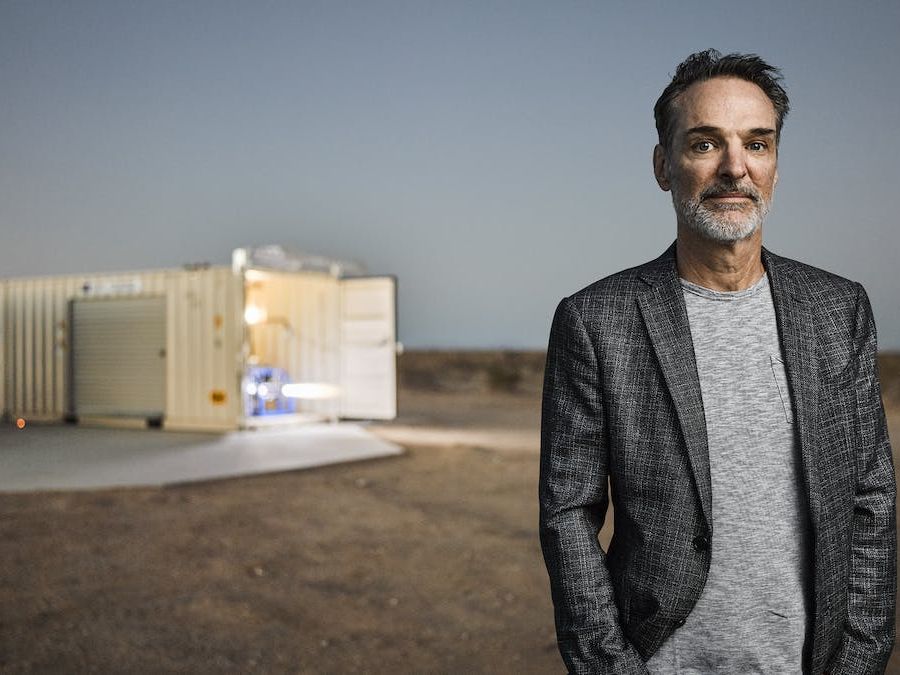
SpaceX Employee #1, Tom Mueller a Brief Biography

Tom Mueller: The Rocket Engineer Pioneering HyperAbundance in Space In the grand narrative of human progress, few individuals embody the...