Tom Mueller: The Rocket Engineer Pioneering HyperAbundance in Space
In the grand narrative of human progress, few individuals embody the spirit of innovation and the pursuit of hyperabundance as profoundly as Tom Mueller. As a founding employee of SpaceX and the architect behind some of the most revolutionary rocket engines in history, Mueller has played a pivotal role in democratizing access to space. His work has not only shattered the barriers of what was once considered the domain of governments but has also laid the groundwork for a future where space resources fuel unprecedented abundance on Earth and beyond. This biography delves into the life of Thomas John Mueller, tracing his journey from the logging towns of Idaho to the forefront of the space industry, and explores how his contributions are steering humanity toward a hyperabundant era.
Early Life: Roots in the Rugged Northwest
Thomas John Mueller was born on March 11, 1961, in St. Maries, Idaho, a small logging community nestled in the rugged landscapes of the American Northwest. With a population of around 2,500, St. Maries was a place where hard work and self-reliance were ingrained in daily life. Mueller's father was a logger, and it was expected that young Tom would follow in his footsteps. However, from an early age, Mueller displayed a curiosity that transcended the forests surrounding his home.
Inspired by the space race of the 1960s, Mueller began experimenting with model rockets from Estes Industries. These early forays into rocketry ignited a passion that would define his career. He recalls building rockets and even modifying them for greater performance, once using his father's oxy-acetylene welder to create a makeshift engine. Adding water to the mix, he discovered, dramatically increased thrust—a rudimentary lesson in propulsion that foreshadowed his future expertise.
To fund his education, Mueller worked as a logger for four summers, experiencing firsthand the physical demands of the trade. This period instilled in him a work ethic and resilience that would prove invaluable in the high-stakes world of aerospace engineering. Despite his father's wishes, Mueller chose to pursue engineering, drawing parallels to Homer Hickam, the coal miner's son who became a NASA engineer, as depicted in the film October Sky.
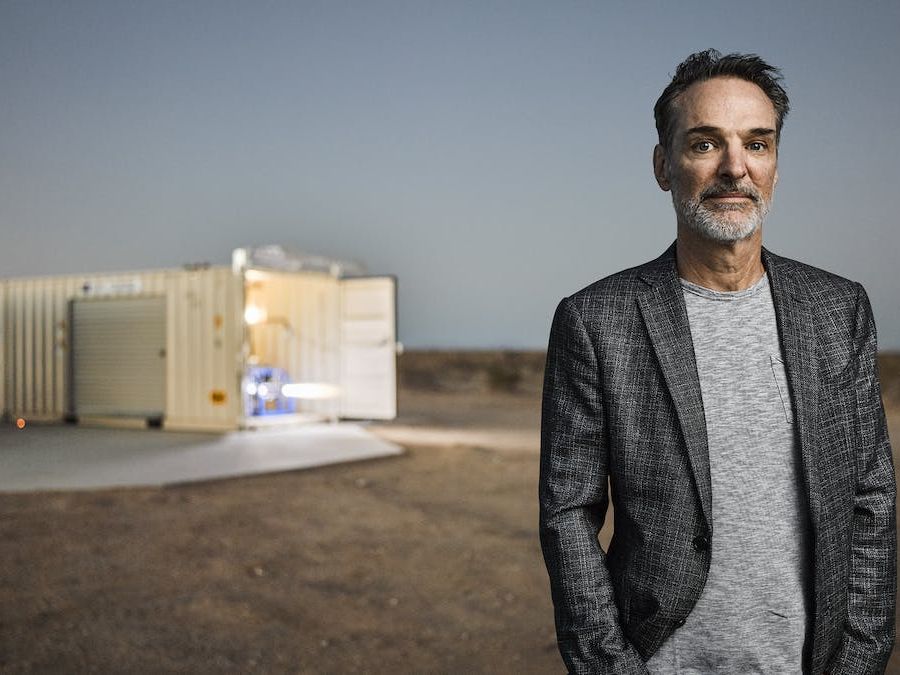
Image: Tom Mueller (Source: Space.com)
Education: Building the Foundation
Mueller attended the University of Idaho, where he earned a Bachelor of Science in Mechanical Engineering in 1985. The program provided him with a solid grounding in mechanics, thermodynamics, and fluid dynamics—disciplines central to rocket propulsion. After graduation, he declined job offers in Idaho and Oregon, opting instead to move to California, the epicenter of aerospace innovation.
While working in the industry, Mueller continued his education at Loyola Marymount University (LMU), obtaining a Master of Science in Mechanical Engineering in 1992 from the Frank R. Seaver College of Science and Engineering. His master's thesis on propulsion systems distinguished him in a competitive field, setting the stage for his professional ascent. In later years, Mueller would give back to LMU, donating $5 million to establish an aerospace propulsion lab, ensuring future generations could follow in his footsteps.
This educational journey was not just about acquiring knowledge; it was about cultivating a mindset geared toward solving complex problems. Mueller's academic pursuits equipped him with the tools to innovate in an industry ripe for disruption.
Early Career: From Satellites to Hobby Rockets
Mueller's professional career began at TRW Inc., a major conglomerate involved in aerospace, automotive, and electronics. Over 15 years, he rose to manage the propulsion and combustion products department, overseeing liquid rocket engine development. One of his notable contributions was as lead engineer on the TR-106, a 650,000 lbf thrust, throttlable hydrogen engine designed in 2000. This project honed his skills in creating cost-effective, high-performance engines.
However, within the bureaucratic structure of a large corporation, Mueller felt his innovative ideas were often lost. To channel his creativity, he pursued personal projects as a hobby. Joining the Reaction Research Society, he built and tested engines in the Mojave Desert. In late 2001, he developed a liquid-fueled rocket engine in his garage, later moving to a friend's warehouse. This engine, weighing 80 pounds and producing 13,000 lbf of thrust, was the largest amateur liquid-fuel rocket engine at the time.
These endeavors caught the attention of Elon Musk, who was scouting talent for his nascent space venture. Mueller's garage-built engine demonstrated not just technical prowess but also the entrepreneurial spirit Musk sought.
Joining SpaceX: The Birth of a Revolution
In 2002, Mueller met Musk through mutual contacts in the aerospace community. Impressed by Mueller's work, Musk hired him as the first employee of Space Exploration Technologies Corp., or SpaceX. As Vice President of Propulsion Engineering, Mueller was tasked with developing the engines that would power SpaceX's ambitious goals.
The early days at SpaceX were chaotic and exhilarating. Operating from a modest facility in El Segundo, California, the team worked tirelessly to build the Falcon 1 rocket. Mueller led the development of the Merlin 1A engine, a kerosene-fueled powerhouse that became the backbone of SpaceX's launch vehicles. Despite initial failures—three unsuccessful launches in 2006, 2007, and 2008—the fourth attempt in 2008 succeeded, making Falcon 1 the first privately developed liquid-fueled rocket to reach orbit.

Image: SpaceX Merlin Engine (Source: Wikipedia)
This milestone was a testament to Mueller's leadership and the team's perseverance. He subsequently oversaw the evolution of the Merlin series: Merlin 1C for the Falcon 9, Merlin 1D with improved thrust and reliability, and the Merlin Vacuum (MVac) for upper-stage operations. These engines enabled reusable rocket technology, drastically reducing launch costs and paving the way for frequent space access.
Achievements at SpaceX: Transforming Space Travel
Under Mueller's guidance, SpaceX achieved numerous firsts. The Kestrel engine powered the Falcon 1's upper stage, while the Draco thrusters provided attitude control for the Dragon spacecraft, which became the first private vehicle to dock with the International Space Station (ISS) in 2012. The SuperDraco engines, storable-propellant systems, formed the launch escape system for Crew Dragon, ensuring astronaut safety.
Mueller's innovations extended to the Falcon Heavy, the world's most powerful operational rocket, and early work on the Raptor engine for Starship. His patents in propulsion technology solidified his status as a leading expert. In 2014, he was nominated for the Wyld Award by the American Institute of Aeronautics and Astronautics for outstanding achievements in rocket propulsion.
By 2014, Mueller transitioned engine development to a dedicated team, becoming Chief Technology Officer (CTO) of Propulsion in 2016. In this role, he focused on advanced technologies, including Mars propulsion and surface power systems. His contributions were instrumental in SpaceX's shift toward sustainability and multi-planetary life, aligning with Musk's vision of hyperabundance through space colonization.
The impact of Mueller's work cannot be overstated. By making space launches more affordable—from millions to tens of thousands per kilogram—SpaceX has enabled a burgeoning space economy. Satellites for global internet, Earth observation, and scientific research have proliferated, fostering abundance in communication, agriculture, and disaster response.
Transition and Retirement from SpaceX
In January 2019, Mueller stepped down from full-time duties, becoming a part-time Senior Advisor to mentor the next generation and advise on propulsion strategies. This transition allowed him to reflect on nearly two decades of groundbreaking work. On November 30, 2020, he officially retired from SpaceX, leaving behind a legacy that continues to propel the company forward.
Reflecting on his time with Musk, Mueller has shared insights into their dynamic partnership. He learned to never say "no" to ambitious ideas, instead finding ways to make them feasible. This mindset of possibility has been key to SpaceX's success and Mueller's personal philosophy.
Founding Impulse Space: The Next Frontier
Retirement did not mean idleness for Mueller. In September 2021, he founded Impulse Space, a company focused on in-space transportation. As CEO and CTO, Mueller aims to solve the "last-mile" delivery problem in space, providing agile, economical vehicles to move payloads to precise orbits.

Image: Impulse Space Mira Spacecraft (Source: SpaceNews)
Impulse Space's flagship product, the Mira spacecraft, uses advanced propulsion systems like the Saiph thruster to maneuver satellites from low Earth orbit (LEO) to geostationary or other custom orbits. This capability addresses a critical gap in the space industry, where launches often drop payloads in suboptimal positions.
The company has seen rapid growth. In 2022, it raised $30 million in seed funding and developed the Saiph thruster. By 2023, a $45 million Series A round followed, and in 2024, a $150 million round led by Founders Fund. In 2025, Impulse secured another $300 million in Series C funding, valuing the company highly and enabling expansion.
Key milestones include the successful launch of the first Mira vehicle in 2024 aboard a Falcon 9 rideshare mission. Impulse is now developing Helios, a larger vehicle for lunar and Mars deliveries, with plans for moon missions by 2028. Mueller envisions a "supply chain to Mars," supporting human settlement and resource utilization.
Impulse's team, drawn from SpaceX and other top firms, brings expertise in propulsion and spacecraft design. Mueller's leadership has positioned the company as a leader in in-space logistics, essential for the emerging space economy valued at trillions.
Personal Life and Philosophy: A Vision for HyperAbundance
Based in Manhattan Beach, California, Mueller maintains a low profile, focusing on family and his passion for space. He holds several U.S. patents and is a sought-after speaker, sharing lessons from his career.
Mueller's philosophy centers on making space accessible to foster abundance. He believes that solving in-space mobility will unlock resources like asteroids' minerals and solar power, leading to hyperabundance—where scarcity is eliminated through technology.
In interviews, he emphasizes collaboration and innovation over competition. His journey from logger to space pioneer exemplifies how determination and curiosity can drive transformative change.
Conclusion: Legacy of Innovation
Tom Mueller's biography is a testament to the power of human ingenuity. From humble beginnings in Idaho to revolutionizing space propulsion at SpaceX and now at Impulse Space, he has consistently pushed boundaries. His work has reduced space access costs, enabled reusable rockets, and is now building infrastructure for interplanetary travel.
In the context of hyperabundance, Mueller's contributions are foundational. By making space a realm of opportunity rather than exclusivity, he is helping humanity transition to a multi-planetary species, where resources are plentiful and innovation boundless. As we look to the stars, Tom Mueller stands as a beacon, guiding us toward a future of unlimited potential.
Sources
- Grokipedia: Tom Mueller
- Impulse Space: Our Mission
- Space.com: Impulse Space CEO Tom Mueller talks early days at SpaceX
- CNBC: Impulse space startup raises $150 million
- Bloomberg: Former Key SpaceX Engineer's Impulse Space Raises $300 Million

.jpg)


